


Here’s the uncomfortable truth about VPN review sites: many of them are owned by the same companies that make the VPNs they’re ranking. It’s a cosy little arrangement that has very little to do with which product actually protects your privacy.
So let’s cut through it. Based on independent testing data from March 2026, covering speed benchmarks, streaming reliability, privacy audits, and real-world usability, here are the VPNs that actually earn their place on the list.
Why You Actually Need a VPN in 2026
Your internet provider can see everything you do online. So can public Wi-Fi networks, advertisers, and — depending on where you live — your government. A VPN encrypts your traffic and routes it through a secure server, making your activity unreadable to anyone snooping on the connection. It also masks your real IP address, which is how streaming platforms know where you are.
With data breaches hitting record levels and more countries introducing internet restrictions, VPN usage has grown sharply. The global VPN market was valued at over $45 billion in 2024 and is projected to nearly double by 2030.
1. NordVPN — Best Overall
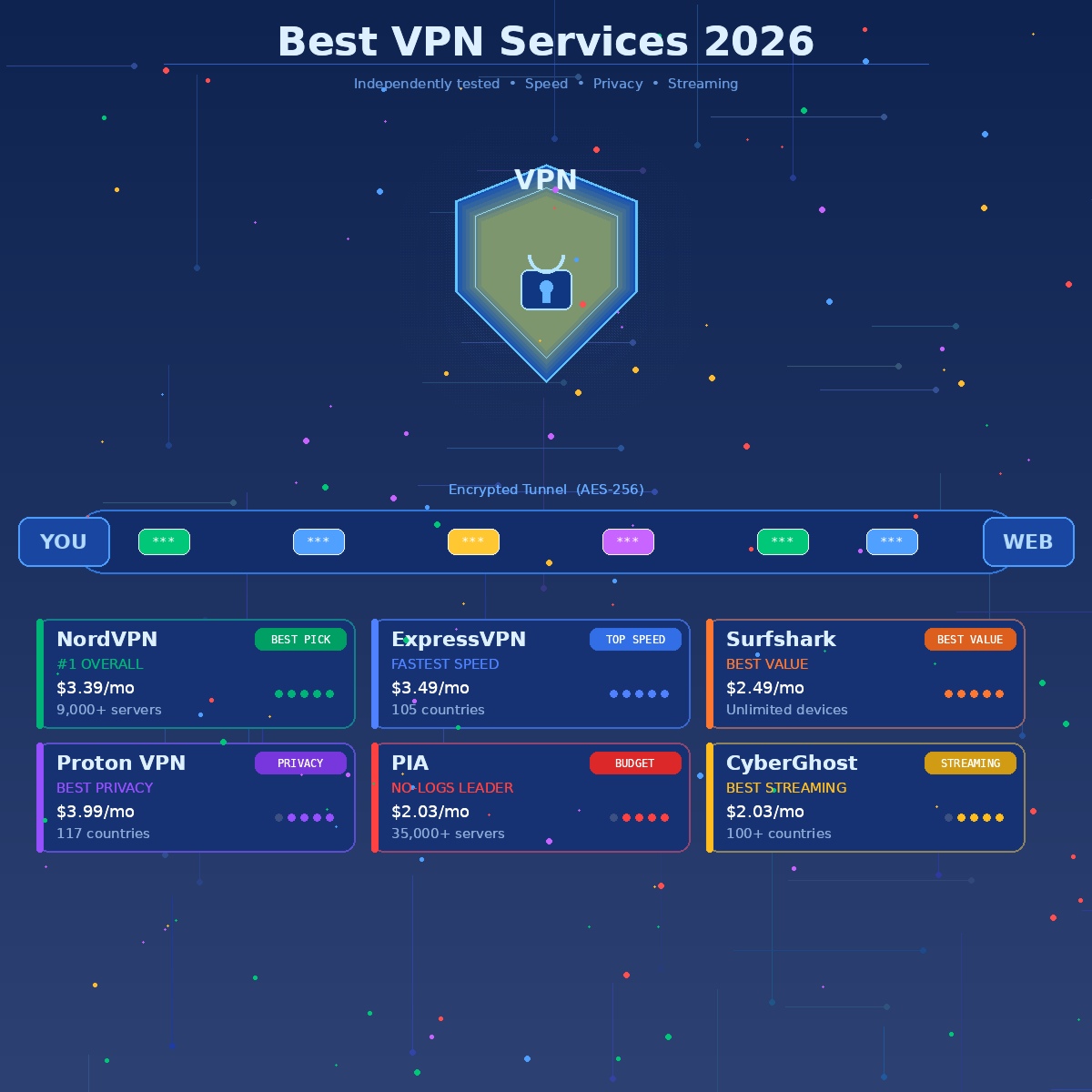
NordVPN has been the consensus top pick for several years running, and in 2026 it’s still earning that position. In January 2026 speed testing, its download speeds slowed by just 6% — even on distant servers. It passed its sixth independent no-logs audit by Deloitte in early 2026, which means an external firm has now confirmed six times that NordVPN genuinely doesn’t store your browsing data.
It runs 9,000+ servers across 118 countries, consistently unblocks Netflix, Disney+, BBC iPlayer, and Prime Video, and its Threat Protection Pro feature blocked 87% of malicious URLs in Tom’s Guide testing — just two fewer than a dedicated antivirus. Plans start from $3.39/month on a two-year plan.
2. ExpressVPN — Best for Speed
ExpressVPN is the one to reach for when you want something that simply works without thinking about it. In March 2026 testing, ping to London increased by just 4ms over a bare connection — a figure no other tested VPN came close to matching. It supports up to 10 simultaneous connections, operates RAM-only servers (meaning no data is ever written to disk), and uses its own audited Lightspeed protocol alongside WireGuard with post-quantum encryption. Pricing starts at $3.49/month.
3. Surfshark — Best Value
Surfshark’s standout feature is simple: unlimited device connections on one subscription. One account covers every phone, laptop, tablet, and smart TV in your home without any additional cost. It achieved a 100% streaming hit rate in recent testing across Netflix US/UK, Disney+, Hulu, and BBC iPlayer. Plans start from around $2.49/month — one of the lowest prices among genuinely capable VPNs.
4. Proton VPN — Best for Privacy
Proton VPN is built by the same team behind ProtonMail, the encrypted email service used by journalists and activists worldwide. It’s based in Switzerland — outside both US and EU data retention laws — and its open-source apps have been independently audited multiple times. If your primary concern is staying genuinely anonymous online rather than unblocking Netflix, Proton is where you should be looking. Its Secure Core feature routes traffic through multiple countries before it exits, making traffic analysis extremely difficult. Pricing starts at $3.99/month, and there’s a genuinely usable free tier with unlimited data but limited server locations.
5. Private Internet Access (PIA) — Best Budget Pick
PIA has the largest server network of any VPN on this list — over 35,000 servers globally — and has demonstrated its no-logs policy in court, not just in marketing material. When US authorities subpoenaed PIA for user data, there was nothing to hand over. Its speeds are solid, its apps work on essentially every platform, and long-term plans drop as low as $2.03/month, making it the most affordable option among trusted providers.
6. CyberGhost — Best for Streaming
CyberGhost has dedicated streaming servers optimized specifically for individual platforms, which takes the guesswork out of which server to connect to. It passed all six streaming platform tests in March 2026 testing. With servers in over 100 countries and apps that are genuinely beginner-friendly, it’s a solid pick if your main use case is watching content from other regions.
What to Look for When Choosing a VPN
Before buying anything, check for three things. First, a verified no-logs policy — not just a claim in the marketing, but an independent audit by a named firm. Second, AES-256 encryption or WireGuard protocol support. Third, a kill switch, which cuts your internet connection if the VPN drops unexpectedly so your real IP is never exposed.
Avoid free VPNs unless you know exactly what you’re getting. Nearly 90% of free VPNs tested by top10vpn.com had serious flaws — many were logging and selling the very data they promised to protect.
The right VPN depends on your situation. But any of the six above will do the job properly.


