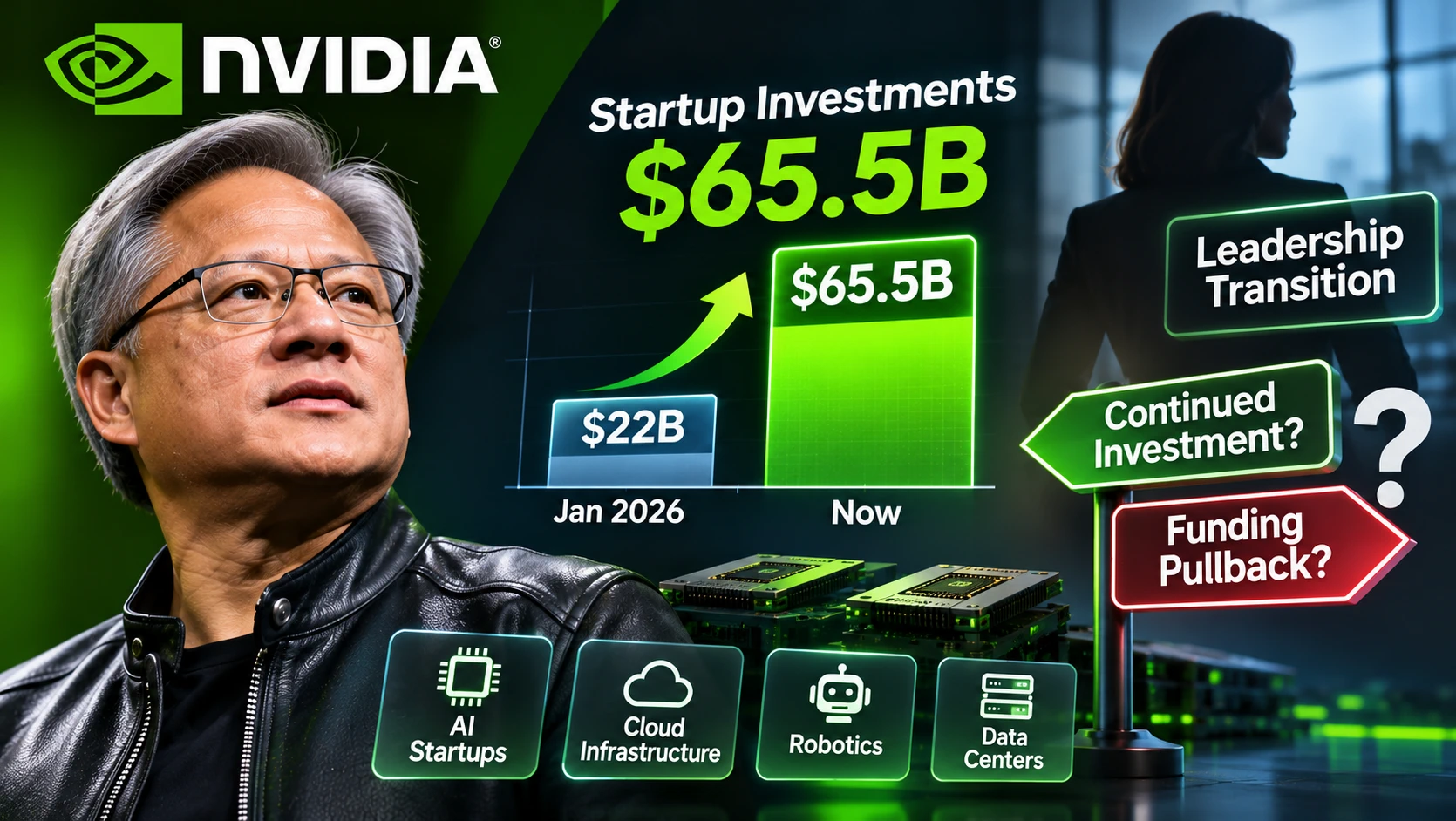
Nvidia’s investments in private and public companies have grown substantially, with the chipmaker reporting that its equity portfolio reached $65.5 billion as of Tuesday. That represents a significant increase from the $22 billion disclosed in January, reflecting both fresh investments and rising valuations across companies already in its portfolio.
The company invested approximately $16 billion in equities during its latest quarter and a total of $58 billion over the first nine months of its fiscal year. These figures include purchases of shares in both public and private businesses, highlighting just how aggressively Nvidia has expanded its investment activity.
The contrast with the previous year is striking. In November 2025, Nvidia reported spending around $5 billion on equity investments during the first nine months of that fiscal year.
However, the future pace of this investment strategy is now uncertain, particularly as the company prepares for a leadership transition following Jensen Huang’s departure.
Nvidia Has Become a Major Force in AI Startup Funding
Nvidia explained in late 2023 that its corporate investment strategy was designed to strengthen the broader artificial intelligence ecosystem by supporting companies it viewed as potential industry leaders and market makers.
Since then, the chipmaker has backed nearly 350 startups, according to PitchBook.
Its investment portfolio spans several important areas of the AI industry, including:
- AI model developers: Anthropic and OpenAI.
- Emerging AI laboratories: Thinking Machines and Reflection.
- Cloud infrastructure providers: Lambda, Nscale, and Crusoe.
- AI infrastructure and robotics: Companies building the hardware, systems, and applications needed to support the expanding AI market.
Nvidia has also become an important financial supporter of large-scale data center development. The company reported $118 billion in guarantees, including a $105 billion backstop connected to OpenAI’s planned $500 billion data center project in Ohio.
These commitments demonstrate how Nvidia has used a portion of its substantial cash generation to support the infrastructure and businesses that contribute to demand for its technology.
Leadership Changes Could Bring a More Conservative Investment Strategy
During Tuesday’s earnings call, Nvidia CFO Colette Kress indicated that the company would continue offering financial support to strong customers. However, she also suggested that future commitments would receive closer scrutiny as the market develops and alternative sources of financing become available.
Kress said Nvidia would be rigorously evaluating future investments, commitments, and guarantees as additional capital sources emerge.
This approach could signal a shift from the aggressive investment strategy associated with Huang.
According to people familiar with investor discussions, some investors have viewed Huang’s extensive dealmaking as a concern. They expect Kress, who is serving as interim CEO and is positioned as his successor, to take a more cautious approach to startup investments.
That could mean fewer new deals, greater selectivity when choosing companies to support, and smaller investments in businesses already backed by Nvidia.
Shareholder Returns May Take Priority
Nvidia has also indicated that returning excess cash to shareholders will remain an important financial priority.
During the earnings call, Kress said the company intends to return all excess free cash flow, after accounting for strategic uses, to shareholders during the final quarter and beyond.
That statement raises an important question for the venture capital industry: how much of Nvidia’s available capital will continue flowing into startups under its next leadership team?
The company has not announced a complete change in its investment strategy, but its emphasis on evaluating future commitments suggests that individual deals may face greater scrutiny.
AI Startups Could Face a Different Funding Environment
Nvidia’s investment activity has become an important part of the AI startup ecosystem, helping fund companies developing models, cloud infrastructure, robotics, and other emerging technologies.
A significant reduction in that support could affect businesses that have come to view Nvidia as both a strategic partner and a source of capital.
For now, venture capital investors and startup founders are preparing for the possibility of a pullback. Whether Nvidia maintains its previous investment pace or adopts a more selective approach will depend largely on the priorities of its incoming leadership and the availability of alternative funding.
With its equity portfolio now valued at $65.5 billion, Nvidia has established itself as a major investor across the AI industry. The next leadership chapter will determine whether that influence continues to expand at the same pace.
