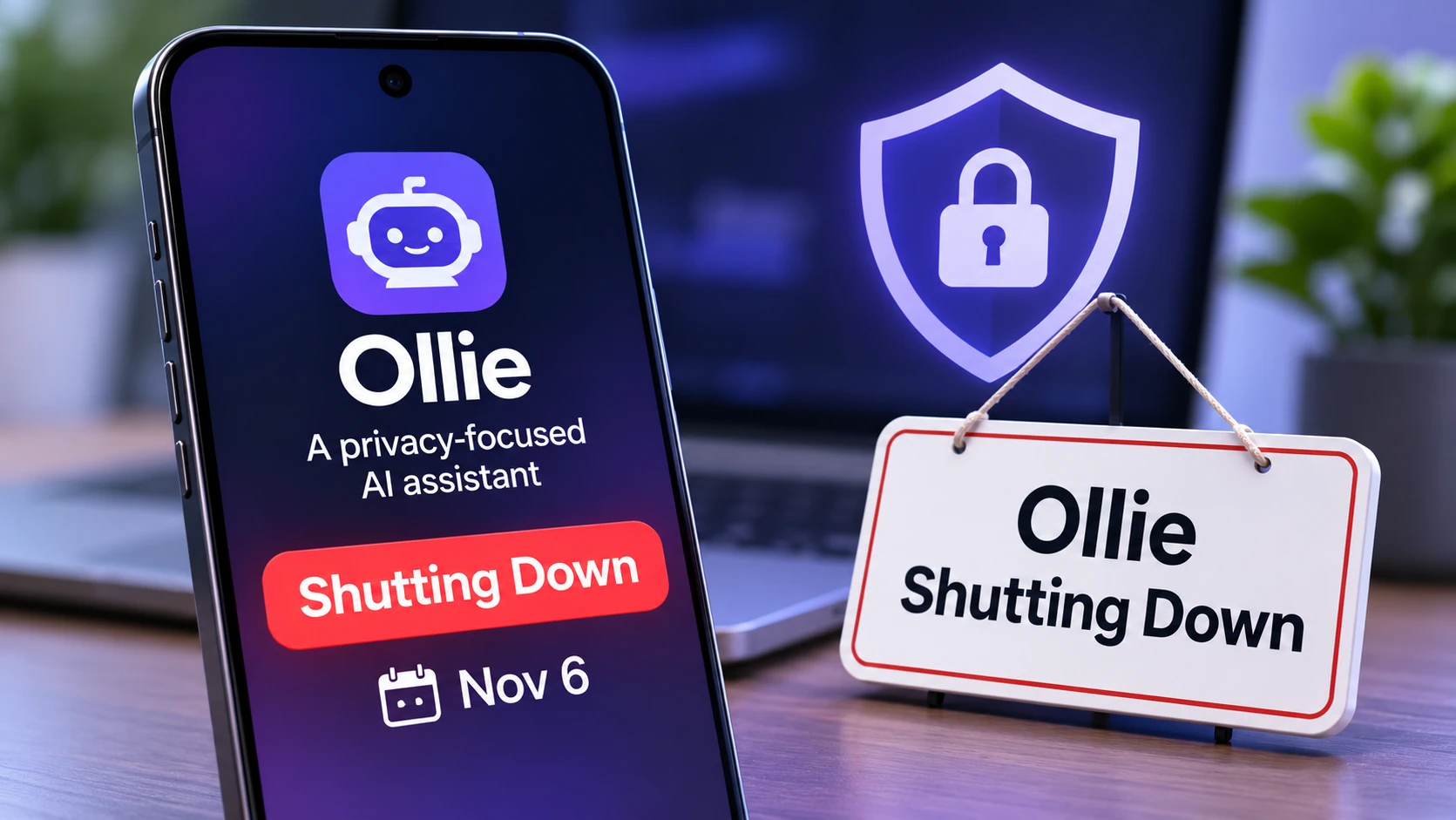
Ollie, an AI startup built around the idea of providing users with a more private and secure digital assistant, is preparing to shut down its service on November 6.
The announcement came from co-founder and CEO Bill Lennon, who shared the news on X. He expressed pride in what the small team had achieved and thanked employees, customers, investors, and supporters who helped build the company.
Despite its ambitions, Ollie ultimately struggled to keep pace with the rapidly changing AI assistant market.
An AI Assistant Designed to Simplify Everyday Life
Ollie was developed as a personal AI assistant focused on helping individuals and families manage their daily responsibilities.
Unlike conventional chatbots that primarily answer questions, the application aimed to bring several everyday services together in one place.
Users could connect their email accounts and calendars to organize schedules, manage appointments, plan meals, and handle bill payments. The company also had plans to introduce household budgeting tools as the platform evolved.
Ollie operated through a subscription-based business model, offering its features to customers through paid memberships.
Privacy Was Ollie’s Biggest Selling Point
What made Ollie different from many competing AI assistants was its strong emphasis on user privacy.
The company worked to establish itself as a trustworthy alternative for people who wanted the convenience of AI without unnecessarily exposing their personal information.
One of its notable achievements was obtaining SOC 2 compliance, a security and privacy-related framework that involves an independent audit of an organization’s controls and practices.
This was an important milestone for a relatively young AI startup, particularly because Ollie’s services involved access to sensitive information such as emails, calendars, and household activities.
However, strong privacy protections alone were not enough to guarantee commercial success in an increasingly competitive market.
Competition Made It Difficult to Keep Growing
The AI personal assistant industry has expanded rapidly as newer models have become more capable of handling complex tasks.
Companies are now competing to build assistants that can manage schedules, interact with applications, organize information, and complete actions on behalf of users.
According to Lennon, the arrival of competitors such as Meta’s Muse and Instinct made it increasingly difficult for Ollie to attract customers, differentiate its product, and secure the investment needed to continue operating.
The company had previously raised $7.5 million in seed funding, led by Khosla Ventures, but that financial backing was ultimately insufficient to sustain its ambitions.
Lennon acknowledged that Ollie came close to achieving its goals but could not keep up with the pace of the industry.
What Happens to Existing Ollie Users?
Ollie says it will provide customers with instructions for exporting their personal data and receiving refunds.
These details are expected to be shared in the days surrounding the shutdown, giving subscribers an opportunity to retrieve their information before the service becomes unavailable.
For users who relied on Ollie to manage family schedules, appointments, and other personal responsibilities, the closure means they will need to find alternative tools.
A Difficult Lesson for Privacy-Focused AI Startups
Ollie’s shutdown highlights the challenges facing smaller companies trying to compete in the rapidly evolving AI market.
Building a useful assistant is no longer enough. Startups must also compete with technology giants that have access to larger budgets, powerful AI models, established user bases, and extensive infrastructure.
Ollie’s commitment to privacy gave it a distinctive position, but the company struggled to turn that advantage into a sustainable business.
Its closure also raises a broader question about the future of personal AI assistants: Can smaller companies build privacy-first alternatives and compete successfully against technology giants with significantly greater resources?
As AI assistants become more deeply involved in people’s personal and professional lives, the demand for privacy and security will remain important. Whether that demand can support independent businesses in the long term is another challenge entirely.
