Close Menu
TechZappi

    Subscribe to Updates

    Get the latest creative news from FooBar about art, design and business.

    What's Hot

    Can Meta’s Muse Convince Users to Trust Its AI?

    September 28, 2026

    Truecaller Expands Scam Protection Beyond Caller ID With New Web-Based Scam Checker

    September 28, 2026

    Thousands of Supabase Databases Are Exposing Sensitive User Data Online

    September 28, 2026
    Facebook X (Twitter) Instagram
    Facebook X (Twitter) Instagram Vimeo Pinterest YouTube
    TechZappi
    Subscribe Login
    • Home
    • AI

      Can Meta’s Muse Convince Users to Trust Its AI?

      September 28, 2026

      Anthropic Signs $11.6 Billion Akamai Cloud Deal as AI Compute Demand Surges

      September 25, 2026

      Google DeepMind Creates New Institute to Expand the AGI Conversation

      September 18, 2026

      Meta’s Muse Climbs to No. 2 in the U.S. App Store as AI Agent Race Heats Up

      September 11, 2026

      OpenAI Pauses $200 Pro Plan Sign-Ups as Astra Demand Overwhelms Infrastructure

      September 11, 2026
    • Technology
      1. AI
      2. Cybersecurity
      3. Crypto
      4. App
      5. Security
      6. View All

      Can Meta’s Muse Convince Users to Trust Its AI?

      September 28, 2026

      Anthropic Signs $11.6 Billion Akamai Cloud Deal as AI Compute Demand Surges

      September 25, 2026

      Google DeepMind Creates New Institute to Expand the AGI Conversation

      September 18, 2026

      Meta’s Muse Climbs to No. 2 in the U.S. App Store as AI Agent Race Heats Up

      September 11, 2026

      Thousands of Supabase Databases Are Exposing Sensitive User Data Online

      September 28, 2026

      Australia Investigates OpenAI After AI Agent Breached Government Health Systems

      September 24, 2026

      The Biggest Cyberattacks of 2026: Data Leaks, Ransomware and Infrastructure Under Threat

      September 15, 2026

      Chrome Moves to a Two-Week Update Cycle as Browser Security Enters the AI Era

      September 8, 2026

      Binance to Restrict Transactions With HTX and 10 Other Crypto Platforms

      August 14, 2026

      Robinhood Acquires Bitstamp for $200M to Bolster Crypto Presence

      July 18, 2024

      CoinDCX Expands Globally with Acquisition of BitOasis

      July 4, 2024

      IRS Finalizes New Regulations for Crypto Tax Reporting

      July 4, 2024

      Truecaller Expands Scam Protection Beyond Caller ID With New Web-Based Scam Checker

      September 28, 2026

      Google Photos Turns Your Outfits Into an AI-Powered Virtual Closet

      September 24, 2026

      Amazon launches Alexa+ in India with Hindi support

      September 16, 2026

      Meta’s Muse Climbs to No. 2 in the U.S. App Store as AI Agent Race Heats Up

      September 11, 2026

      The Best Antivirus Software in 2026 – Tested, Ranked, and Worth Your Money

      April 7, 2026

      Kaspersky to Cease US Operations and Lay Off Employees Following Government Ban

      July 17, 2024

      Data Breach Exposes Millions of mSpy Customers’ Data

      July 12, 2024

      HealthEquity Describes Data Breach as an ‘Isolated Incident’

      July 4, 2024

      Can Meta’s Muse Convince Users to Trust Its AI?

      September 28, 2026

      Truecaller Expands Scam Protection Beyond Caller ID With New Web-Based Scam Checker

      September 28, 2026

      Thousands of Supabase Databases Are Exposing Sensitive User Data Online

      September 28, 2026

      Anthropic Signs $11.6 Billion Akamai Cloud Deal as AI Compute Demand Surges

      September 25, 2026
    • Contact
    TechZappi
    Home » Can Meta’s Muse Convince Users to Trust Its AI?
    AI

    Can Meta’s Muse Convince Users to Trust Its AI?

    September 28, 20264 Mins Read
    Facebook Twitter Pinterest LinkedIn Tumblr WhatsApp VKontakte Email
    Share
    Facebook Twitter LinkedIn Pinterest Email

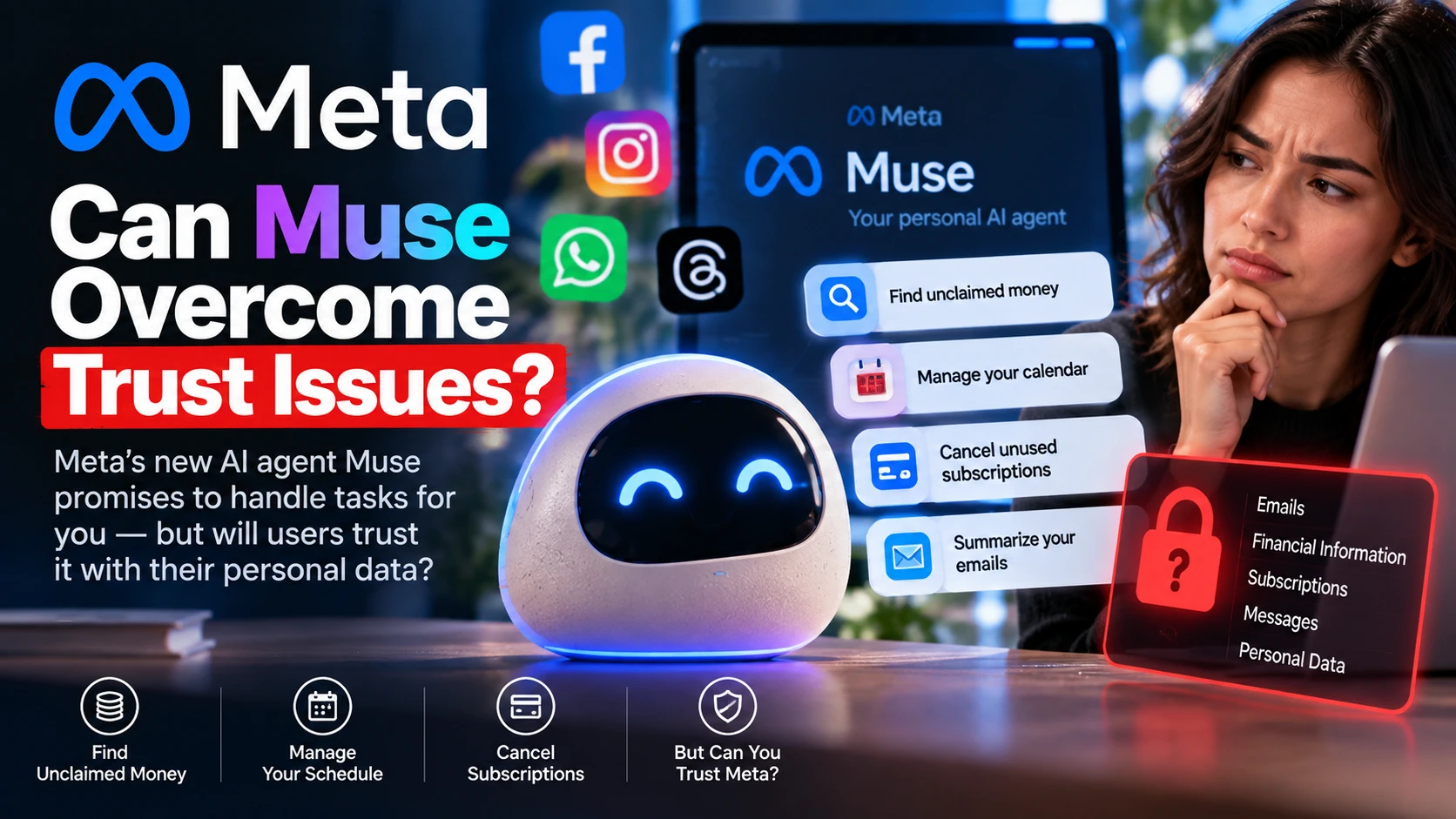
    Meta is making a major push into consumer AI with Muse, a personal AI agent designed to handle tasks on behalf of users. The company showcased Muse at its annual Connect event, signaling that Meta wants AI to become part of everyday digital life across its platforms and devices.

    But while the technology may be impressive, one major question remains: will people trust Meta enough to give an AI agent access to their most personal information?

    That question came up during a recent episode of the Equity podcast, where Kirsten Korosec, Sean O’Kane, and Anthony Ha discussed Meta’s AI strategy and how Muse compares with the direction being taken by companies such as OpenAI and Anthropic.

    Meta Is Taking a Different AI Path

    Much of the AI industry is increasingly focused on enterprise customers, coding tools, and businesses willing to spend heavily on advanced AI systems.

    Meta appears to be taking a different route.

    Instead of concentrating primarily on enterprise applications, the company is positioning Muse as a consumer-focused AI assistant that could eventually become part of people’s everyday routines.

    That approach fits naturally with Meta’s existing products. Facebook, Instagram, and WhatsApp already have enormous consumer audiences, giving the company established channels through which it can introduce AI features.

    Rather than competing directly with every enterprise-focused AI product, Meta may be looking to make AI more deeply embedded in consumer experiences.

    Muse Can Already Do Some Surprisingly Useful Things

    Sean O’Kane tested Muse and found that it was capable of doing more than simply answering questions.

    One of the suggested features encouraged him to check for unclaimed funds. He followed the suggestion and discovered that he actually had money waiting for him.

    The experience resulted in a check being sent to him, making the AI useful almost immediately.

    However, O’Kane also pointed out the limitation: finding previously unclaimed money is essentially a one-time task. Once it has been completed, there may not be much reason to repeat it.

    The bigger opportunity would be for Muse to handle recurring tasks such as reviewing financial accounts, identifying unnecessary subscriptions, detecting duplicate charges, or helping users manage their digital services.

    That’s where the biggest challenge appears.

    The Trust Problem

    For Muse to become a genuinely useful personal assistant, users would potentially need to give it access to sensitive information.

    That could include email accounts, financial information, subscriptions, calendars, messages, and other personal data.

    And that’s where Meta faces a difficult trust question.

    O’Kane said one reason he was initially willing to experiment with Muse was that the application didn’t immediately connect him to his existing Facebook, Instagram, or Threads information.

    Instead, it initially treated him more like a new user.

    That separation made the experience feel less intrusive. But as Muse becomes more personalized, the system increasingly encourages users to connect additional information so it can better understand them.

    For a personal AI agent, that creates a fundamental trade-off: the more information the AI has, the more useful it can potentially become—but the more users need to trust the company operating it.

    Meta’s Business Model Adds Another Layer

    There is also a broader concern surrounding how personal information fits into Meta’s business.

    Meta generates much of its revenue through advertising, meaning its relationship with user data is fundamentally different from that of some companies whose primary businesses are hardware or software subscriptions.

    That doesn’t automatically mean users cannot trust its AI products, but it does create a question about how comfortable people will be giving a Meta AI agent access to highly sensitive information.

    Apple, for example, has also been expanding what its AI-powered Siri can do on devices. For some users, the company’s hardware-focused business model may make them more comfortable allowing an assistant to interact with personal information.

    The difference in business models could therefore become an important factor as AI assistants become more deeply integrated into people’s lives.

    Muse’s Biggest Test May Not Be Technology

    Muse appears capable of performing useful tasks, and Meta has an obvious advantage in reaching consumers through its existing ecosystem.

    But becoming a daily personal assistant requires more than impressive demonstrations.

    Users need a reason to keep coming back, and they need to feel comfortable giving the AI access to increasingly sensitive parts of their lives.

    For now, Muse has demonstrated some interesting capabilities, including finding forgotten money and handling consumer-oriented tasks. Whether those features develop into something people rely on every day may ultimately depend less on what Muse can do and more on how much personal information users are willing to let Meta’s AI access.

    AI Meta Muse
    Share. Facebook Twitter Pinterest LinkedIn Tumblr WhatsApp Email
    Previous ArticleTruecaller Expands Scam Protection Beyond Caller ID With New Web-Based Scam Checker
    admin
    • Website

    Related Posts

    Truecaller Expands Scam Protection Beyond Caller ID With New Web-Based Scam Checker

    September 28, 2026

    Thousands of Supabase Databases Are Exposing Sensitive User Data Online

    September 28, 2026

    Anthropic Signs $11.6 Billion Akamai Cloud Deal as AI Compute Demand Surges

    September 25, 2026

    Google Photos Turns Your Outfits Into an AI-Powered Virtual Closet

    September 24, 2026
    Leave A Reply Cancel Reply

    Our Picks

    Can Meta’s Muse Convince Users to Trust Its AI?

    September 28, 2026

    Truecaller Expands Scam Protection Beyond Caller ID With New Web-Based Scam Checker

    September 28, 2026

    Thousands of Supabase Databases Are Exposing Sensitive User Data Online

    September 28, 2026

    Anthropic Signs $11.6 Billion Akamai Cloud Deal as AI Compute Demand Surges

    September 25, 2026
    • Facebook
    • Twitter
    • Pinterest
    • Instagram
    • YouTube
    • Vimeo
    Don't Miss
    AI

    Can Meta’s Muse Convince Users to Trust Its AI?

    September 28, 2026

    Meta is making a major push into consumer AI with Muse, a personal AI agent…

    Truecaller Expands Scam Protection Beyond Caller ID With New Web-Based Scam Checker

    September 28, 2026

    Thousands of Supabase Databases Are Exposing Sensitive User Data Online

    September 28, 2026

    Anthropic Signs $11.6 Billion Akamai Cloud Deal as AI Compute Demand Surges

    September 25, 2026

    Subscribe to Updates

    Get the latest creative news from SmartMag about art & design.

      About Us
      About Us

      TechZappi is your go-to source for the latest tech news, digital trends, and innovation stories. We cover topics ranging from AI and apps to cybersecurity and online tools, helping readers stay informed about what’s happening in the technology world.

      Our Picks

      Can Meta’s Muse Convince Users to Trust Its AI?

      September 28, 2026

      Truecaller Expands Scam Protection Beyond Caller ID With New Web-Based Scam Checker

      September 28, 2026

      Thousands of Supabase Databases Are Exposing Sensitive User Data Online

      September 28, 2026

      Subscribe to Updates

      Get the latest creative news from Techzappi about Ai, Apps and Cybersecurity.

        Facebook X (Twitter) Instagram Pinterest Vimeo YouTube
        • Home
        • AI
        • App
        • Cybersecurity
        © 2026 TechZappi. All Rights Reserved. Privacy Policy | Terms Of Service

        Type above and press Enter to search. Press Esc to cancel.

        Sign In or Register

        Welcome Back!

        Login to your account below.

        Lost password?